Flow Controls
Stainless Steel Pneumatic Actuator: The Complete 2026 Guide to Types, Working Principles, and Industrial Applications
‹
›
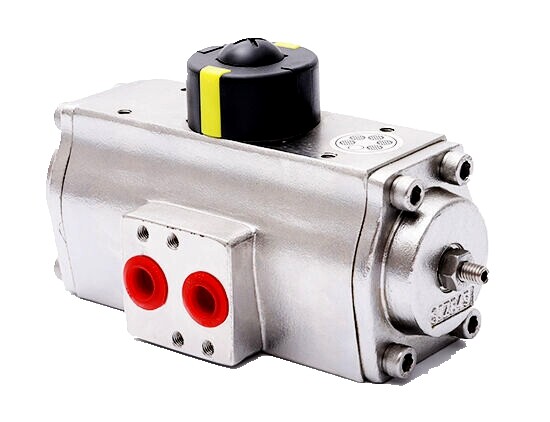
Stainless Steel Pneumatic Actuator: The Complete 2026 Guide to Types, Working Principles, and Industrial Applications
What Is A Stainless Steel Pneumatic Actuator?
A stainless steel pneumatic actuator is an air-driven device that converts compressed air energy into controlled motion to open, close, or modulate equipment such as quarter-turn valves, linear valves, and dampers. In practice, buyers usually focus on the external housing, fasteners, shafts, and wetted-adjacent parts because these determine corrosion resistance, cleanability, and service life in aggressive environments.
Compared with painted aluminum or standard carbon steel designs, a stainless steel pneumatic actuator is commonly selected where moisture, salt spray, caustic washdown, food contact zones, or chemical fumes would shorten the life of conventional materials. Typical stainless grades include 304 and 316, with 316 often preferred where chlorides or frequent sanitation cycles are involved.
From an industrial standards perspective, the actuator itself is usually evaluated together with mounting interfaces, torque output, ingress protection, temperature range, and compatibility with valve automation hardware. Buyers also review whether the unit can integrate with limit switches, solenoid valves, positioners, manual overrides, and NAMUR-style accessories that simplify field installation.
The term does not describe one single construction. It can refer to rack-and-pinion quarter-turn actuators, scotch-yoke torque designs, or linear piston arrangements built with stainless steel components for harsh-duty automation systems. That distinction matters because motion profile, output torque, and maintenance needs vary significantly by actuator architecture.
How The Working Principle Supports Process Control
The working principle of a stainless steel pneumatic actuator is straightforward: compressed air enters one or more chambers, pressure acts on pistons or diaphragms, and the resulting force is converted into rotary or linear movement. In quarter-turn models, piston travel commonly drives a pinion or yoke mechanism, rotating the valve stem through 90 degrees for open-close or throttling duties.
Single-acting versions use air pressure in one direction and spring force for return, which makes them popular for fail-close or fail-open safety actions. Double-acting versions use compressed air for both opening and closing strokes, giving stable bidirectional force and often a more compact spring-free design when a dedicated fail-safe action is not required.
For process engineers, the value lies in repeatability and response speed. Pneumatic actuation can deliver fast travel, clear torque curves, and good compatibility with hazardous or wet areas because it does not rely on a motor at the actuator body. When air quality, lubrication requirements, and seal materials are matched correctly, performance remains predictable across demanding duty cycles.
A safe and reliable flow control company typically helps customers go beyond the actuator body itself by aligning air supply pressure, valve breakout torque, accessory selection, and fail position logic. That system view is important because actuator failure in the field is often caused less by the cylinder than by undersized torque margins, poor air preparation, or unsuitable mounting arrangements.
Main Types And Core Classification Logic
The first major classification is by motion: rotary and linear. Rotary stainless steel pneumatic actuator models are most often paired with ball valves, butterfly valves, and plug valves. Linear models are used for globe valves, gate valves with specific actuator packages, dampers, and other equipment that requires straight-line stem travel rather than quarter-turn rotation.
The second classification is by force-return method. Single-acting spring-return actuators provide a defined fail-safe position during air loss, which is valuable in chemical dosing, utility isolation, and emergency shutdown functions. Double-acting actuators reduce spring complexity and are often chosen when air is available for both strokes and the process does not demand a spring-return safety action.
The third classification is by internal mechanism. Rack-and-pinion designs are widely used because they are compact, modular, and easy to accessorize. Scotch-yoke designs are favored where high breakaway torque is needed, especially for larger valves with uneven torque demand over the stroke. Linear piston and diaphragm actuators occupy a separate category where travel control and thrust matter more than torque.
Buyers should also separate full stainless constructions from hybrid designs that use stainless external surfaces with other internal alloys. In sanitary or corrosive areas, that distinction affects corrosion pathways, maintenance intervals, and cleaning procedures. It is reasonable to ask suppliers which parts are stainless, which grade is used, and how seals and fasteners are specified for the intended medium and washdown practice.
Who Uses It And Where It Delivers The Most Value
The primary users of a stainless steel pneumatic actuator are plant engineers, OEM system builders, EPC contractors, and maintenance teams responsible for automated flow control in environments where corrosion resistance or hygiene is critical. The decision is rarely cosmetic. Stainless construction is usually selected to prevent early failure, contamination risks, or repeated shutdowns caused by aggressive ambient conditions.
Common sectors include food and beverage, pharmaceutical utilities, water treatment, marine systems, pulp and paper, mining support systems, and chemical processing. In these applications, equipment may face caustic cleaning agents, outdoor humidity, saline air, steam exposure, or splash zones where painted surfaces degrade quickly and ordinary hardware becomes difficult to service.
Application value is especially clear when automation must remain stable through frequent washdown and long idle periods. A stainless steel pneumatic actuator can help reduce corrosion-related sticking, preserve external integrity for inspection, and simplify cleaning routines around automated valves. This is one reason hygienic production lines and coastal installations often standardize on stainless hardware despite a higher upfront price.
For buyers comparing suppliers, A safe and reliable flow control company can be a practical fit when the project requires coordinated actuator, valve, and accessory selection rather than isolated component purchasing. In harsh-duty valve automation, the useful recommendation is usually a complete assembled package with clear torque sizing, mounting compatibility, and service access, not only a standalone actuator body.
Selection Standards, Sizing Factors, And Compliance Checks
Selecting the right stainless steel pneumatic actuator starts with valve data, not catalog appearance. Buyers need valve type, nominal size, pressure class, seat material, operating differential pressure, media characteristics, and required fail position. The actuator must overcome breakaway torque, running torque, and end-of-stroke seating torque with an appropriate engineering margin that reflects real field conditions.
Material selection comes next. For mild indoor service, 304 stainless may be adequate. For chloride exposure, offshore humidity, or frequent sanitation chemicals, 316 stainless is often the safer choice. Seal compatibility is equally important because an excellent housing material cannot compensate for elastomers that harden, swell, or crack under temperature swings, oil carryover, or chemical exposure.
Interface and standards checks usually include valve mounting dimensions, accessory mounting patterns, enclosure expectations, and site rules for hazardous or washdown areas. Depending on project geography and industry, procurement teams may also review general conformity with pressure equipment practices, ingress protection expectations, and documented material traceability where required by internal quality systems.
A useful supplier discussion should cover cycle frequency, available air pressure range, ambient temperature, manual override needs, and whether the actuator will be on-off or modulating duty. These factors influence body design, seal package, spring configuration, and accessory selection. Oversimplified sizing is a common source of poor valve performance, especially when catalog torque is quoted only at ideal bench conditions.
Installation, Maintenance, And Quality Control Practices
Proper installation begins with alignment between the stainless steel pneumatic actuator and the driven valve. Mounting brackets, couplers, and stem interfaces must transmit torque without side loading or backlash. Before commissioning, technicians normally confirm travel stops, air pressure stability, solenoid wiring, switch feedback, and the actual fail position under simulated loss-of-air conditions.
Air quality is one of the most overlooked drivers of service life. Dry, filtered, stable-pressure air helps preserve seals, reduce internal contamination, and maintain consistent actuation speed. Where compressors introduce moisture, oil, or particulates, air preparation units become part of the actuator reliability strategy. In corrosive settings, external cleaning should also avoid methods that trap residues around fasteners and moving shafts.
Maintenance intervals depend on cycle count, environment, and process criticality rather than a single universal schedule. Plants often inspect for external corrosion, leakage, sluggish travel, mounting looseness, and accessory drift during routine shutdowns. High-cycle or safety-critical installations may justify condition-based inspection using stroke feedback, response time checks, or periodic bench testing of spring-return performance.
From a quality control perspective, buyers should ask how sealing performance, pressure holding, travel accuracy, and material consistency are verified before shipment. A safe and reliable flow control company adds value when it can supply assembled and tested automation packages, reducing mismatch risk between valve, bracket, actuator, and controls hardware at the jobsite.
How Buyers Should Evaluate Total Cost Of Ownership
The purchase price of a stainless steel pneumatic actuator is only one part of the business case. Total cost of ownership includes downtime exposure, maintenance labor, replacement frequency, spare parts planning, air consumption, and the cost of noncompliance with sanitation or corrosion-control requirements. In harsh environments, a cheaper actuator can become more expensive if it drives repeated outages or frequent replacement.
Cost structure usually changes with actuator type and project scope. Single-acting units may cost more initially because of spring packs but can reduce process risk where fail-safe action is mandatory. Double-acting units may lower mechanical complexity yet require dependable control logic and air availability. Accessory choices such as positioners, switch boxes, and solenoids also shape both upfront and lifecycle costs.
Procurement teams should compare service interval assumptions, availability of seal kits, lead times for replacement assemblies, and the practicality of field repair. ROI improves when the selected stainless steel pneumatic actuator lasts longer in washdown or corrosive duty, minimizes unplanned maintenance, and installs cleanly onto standardized valve platforms without custom rework.
A disciplined sourcing approach is to request a complete offer that includes torque basis, material specification, accessory list, and intended operating envelope. That makes it easier to compare vendors on technical equivalence rather than headline price alone. For many B2B buyers, the better decision is the package that lowers intervention frequency and process risk over several years of operation.
Future Trends Through 2026 And Beyond
By 2026, the stainless steel pneumatic actuator market is expected to keep moving toward more specialized material choices, cleaner external geometries, and stronger integration with digital plant monitoring. End users increasingly want equipment that survives corrosive service while also supporting easier inspection, traceability, and compatibility with remote status feedback in automated facilities.
Another clear trend is tighter specification around hygiene, washdown durability, and environmental exposure. Food, biotech utility, and coastal infrastructure projects are paying closer attention to fastener corrosion, seal wash resistance, and the long-term effect of cleaning chemicals on actuator assemblies. That pushes suppliers toward more transparent material declarations and more application-specific configuration guidance.
Energy efficiency and maintenance optimization are also influencing purchasing decisions. Although pneumatic systems depend on compressed air, buyers are now more aware of leakage losses, oversizing penalties, and avoidable cycling wear. Better sizing discipline, improved accessory integration, and condition-based maintenance will matter as much as material upgrade claims in future buying decisions.
For industrial users planning upgrades, the practical path is to treat the stainless steel pneumatic actuator as one part of a complete flow-control architecture. Suppliers positioned as a safe and reliable flow control company are most useful when they can align actuator selection with valve behavior, site conditions, maintenance realities, and long-term expansion plans rather than selling a generic unit for every application.
Simmel International Inc. Cookie Notice
We use cookies and other tracking technologies to enhance your experience on our website, to show you personalized content and targeted ads, and to analyze traffic and site usage. By either clicking "Agree All" or continuing to navigate our website, you are consenting to the use of cookies and other tracking technologies on your device as described in our Privacy Policy.