Flow Controls
Scotch Yoke Pneumatic Actuator Explained: Working Principle, Torque Output, and Key Selection Factors
‹
›
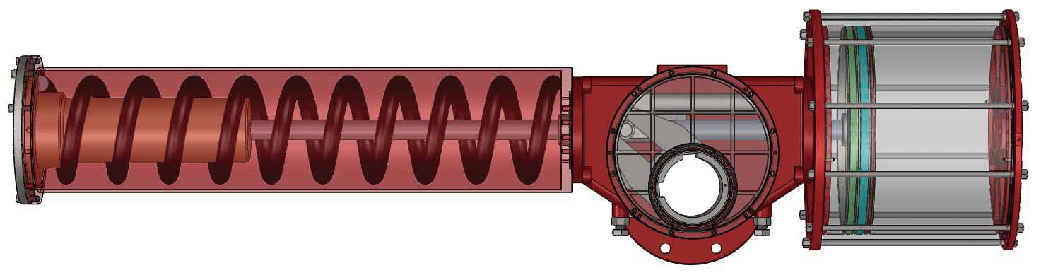
Scotch Yoke Pneumatic Actuator Explained: Working Principle, Torque Output, and Key Selection Factors
What Is A Scotch Yoke Pneumatic Actuator
A scotch yoke pneumatic actuator is a quarter-turn mechanical device that uses compressed air to open, close, or modulate valves such as ball, butterfly, and plug valves. Its defining feature is the yoke-and-slider mechanism, which converts linear piston movement into rotary output at the drive shaft.
In industrial automation, this actuator is selected when higher breakaway torque is needed than a typical rack-and-pinion design can provide in the same general envelope. That makes it especially relevant for larger valves, high differential pressure service, sticky media, and severe-duty shutdown applications.
The basic product family includes double-acting units, which use air for both opening and closing strokes, and spring-return units, which use air in one direction and stored spring energy for the fail action. Both are widely used in process plants where predictable quarter-turn motion is critical.
From an engineering perspective, the scotch yoke pneumatic actuator is less about simple rotation and more about matching a torque profile to the real mechanical resistance of the valve. That is the main reason it remains important in oil and gas, chemical processing, power, water treatment, and other flow control systems.
How The Working Principle Produces Torque
The actuator body contains one or two pistons linked to a central yoke. When compressed air enters the cylinder chamber, the piston travels in a straight line. That linear force pushes the pin inside the yoke slot, causing the drive shaft to rotate through a defined quarter turn, usually 90 degrees.
Torque output changes through the stroke because the effective lever geometry changes as the yoke rotates. This is the key technical difference from constant-radius systems. Near the start and end of travel, the mechanical advantage can be higher, which helps overcome seated or unseated valve resistance.
For many quarter-turn valves, the highest torque demand appears at breakaway and seating. A scotch yoke pneumatic actuator can be shaped to deliver more useful torque at those points, rather than spreading force evenly where it may not be needed. That alignment improves actuator-to-valve matching.
In spring-return designs, compressed air drives one stroke while compressed springs store energy for the reverse movement. In emergency shutdown service, that stored energy supports fail-open or fail-close action after air loss. Selection must consider not only nominal torque, but also the minimum available spring torque across the full stroke.
Main Types And Typical Application Fit
The first major split is double-acting versus spring-return. Double-acting actuators are common where instrument air is reliable and both directions require controlled force. They usually provide compact high torque with straightforward cycling performance, making them suitable for frequent operation and larger automated valve packages.
Spring-return versions are used when the process requires a defined safe position after loss of air supply or control signal. They are common in isolation duty, emergency shutdown loops, fuel gas lines, and hazardous process sections where fail-safe behavior carries more weight than compactness alone.
A second classification concerns symmetric versus canted yoke geometry. Symmetric arrangements tend to balance torque characteristics more evenly over opening and closing. Canted designs can bias torque toward one end of stroke, which is useful when valve breakaway and reseating loads are not the same.
Buyers may also compare scotch yoke units by mounting standard, accessories interface, travel stops, and corrosion protection package. In practical terms, the correct type depends on valve torque behavior, required fail action, operating frequency, available air pressure, site environment, and maintenance access rather than on actuator torque number alone.
Why It Matters In Flow Control Systems
In quarter-turn valve automation, the wrong actuator often fails not because it cannot move the valve once, but because it cannot reliably overcome real operating loads over time. Friction changes, seal wear, pressure variation, and media buildup can all increase torque demand. The scotch yoke pneumatic actuator is valued because it addresses those practical conditions.
Compared with simpler torque delivery patterns, a scotch yoke mechanism often provides stronger breakaway and end-position torque. That can reduce the risk of sluggish response, incomplete closure, and repeated oversizing by trial and error. For process operators, better torque matching usually means more stable performance and fewer unexpected valve issues.
For an automation partner positioned as A safe and reliable flow control company, the real value is not only the actuator body but the complete fit between actuator, valve, control accessories, and duty condition. In industry practice, a sound recommendation includes torque review, fail-state definition, air supply assessment, and environmental protection requirements.
This is why the actuator should be evaluated as part of the flow control assembly instead of as a standalone component. When integrated correctly with solenoid valves, switch boxes, positioners, and mounting hardware, it supports more dependable plant operation and cleaner procurement decisions.
Who Uses It And Where It Performs Best
The primary users are EPC contractors, valve packagers, plant maintenance teams, OEM skids manufacturers, and procurement engineers responsible for automated on-off or emergency shutdown valves. Their shared concern is achieving enough torque under actual site conditions while maintaining serviceability and compliance with project specifications.
Typical sectors include upstream and midstream oil and gas, refining, petrochemical plants, LNG facilities, power generation, mining slurry systems, marine service, and municipal or industrial water treatment. In these environments, large valve sizes or difficult media often make the scotch yoke pneumatic actuator a practical option.
It performs especially well when valves have high breakaway torque, infrequent but critical cycling, or a need for fail-safe return. Butterfly valves in large diameters, trunnion ball valves, and heavy-duty plug valves are common matches when rack-and-pinion sizing becomes less efficient or less economical.
Application review should also include location factors such as ambient temperature, corrosive atmosphere, offshore exposure, dusty service, or limited maintenance access. These conditions influence coating system, seal material, accessory protection, and whether local manual override or position feedback is necessary.
Key Selection Factors Buyers Should Check
The first rule is to size from the valve torque data, not from actuator catalog output in isolation. Buyers should verify breakaway, running, and seating torque, then apply a realistic safety margin based on service severity, cycling frequency, media condition, and supply pressure variation. Understated torque data is a frequent source of field problems.
Next, confirm fail action and control mode. A spring-return actuator may be necessary for fail-close or fail-open duty, while double-acting may be enough for non-critical service. Also check whether the valve is strictly open-close or needs throttling support, since modulating duty may require a positioner and tighter control of hysteresis.
Mechanical and environmental details matter just as much. Review mounting compatibility, output drive dimensions, adjustable travel stops, seal material, body coating, and accessory interface standards. For hazardous or outdoor locations, include enclosure protection, corrosion resistance, and the practicality of future maintenance without full valve removal.
A safe and reliable flow control company should also help buyers compare the complete automation package, not only the actuator. That means checking the valve-actuator matching report, accessory quality, assembly alignment, inspection records, and spare parts strategy before purchase order release.
Installation, Maintenance, And Quality Control Priorities
Successful field performance depends on correct installation discipline. The actuator must be mounted without misalignment, the travel stops must be set to protect the valve seat and disc or ball position, and the air supply must be clean, dry, and stable. Poor air quality shortens seal life and can distort response time.
Routine maintenance intervals vary by service severity, cycle count, and environment. For critical shutdown loops, periodic stroke testing and spring condition checks are often more important than simply waiting for leakage or sluggish motion to appear. In corrosive or dusty environments, external hardware and accessory seals deserve regular inspection.
Quality control at the supply stage should include dimensional fit, pressure integrity, travel verification, and functional testing of the assembled valve package. Even when no brand-specific certification is claimed, disciplined incoming inspection and documented assembly checks reduce startup issues and commissioning delays.
For buyers evaluating suppliers in the automation controller field, it is reasonable to ask how torque calculations are validated, how accessories are integrated, and how spare parts consistency is managed. Those answers often reveal more about long-term reliability than a headline torque figure.
Total Cost Of Ownership And Return Considerations
The purchase price of a scotch yoke pneumatic actuator is only one part of the decision. Total cost of ownership includes mounting hardware, control accessories, air preparation, installation labor, commissioning time, spare parts, inspection frequency, and the cost of process disruption if the actuator fails to achieve its required safe position.
Oversizing can raise package cost and air consumption, but undersizing is usually more expensive in the long run because it causes unstable operation, seat damage, repeated troubleshooting, or emergency replacement. A balanced sizing approach supported by realistic torque data generally delivers the best commercial result.
Buyers should also consider lifecycle support. Common seal kits, accessible service parts, standard accessory interfaces, and clear documentation can materially reduce downtime during plant turnarounds. For internationally deployed projects, packaging, preservation, and after-sales responsiveness also affect total delivered value.
A useful ROI view is simple: if the actuator package reduces unplanned shutdown risk, improves valve response reliability, and avoids repeated resizing or retrofit work, the value often exceeds a small difference in initial equipment price. That is particularly true for critical isolation points in process plants.
Future Trends And Procurement Outlook
The market trend is moving toward smarter and more integrated valve automation packages. Buyers increasingly expect a scotch yoke pneumatic actuator to arrive ready for assembly with standardized interfaces, configurable accessories, and documentation that supports faster project approval, commissioning, and maintenance planning.
Another trend is tighter scrutiny of lifecycle reliability rather than simple nameplate output. End users are asking more detailed questions about torque assumptions, fail-safe performance, low-temperature or corrosive service suitability, and inspection consistency across multiple project batches.
In parallel, process industries continue to favor solutions that simplify risk management. That increases demand for actuator suppliers that can support valve matching, accessory integration, and practical engineering communication. For A safe and reliable flow control company, this creates room to compete through application discipline and dependable package delivery.
For procurement teams, the direction is clear: evaluate the scotch yoke pneumatic actuator as part of a complete flow control decision, focusing on torque profile, fail action, maintainability, and supplier execution quality. That approach leads to better technical fit and fewer lifecycle surprises.
Simmel International Inc. Cookie Notice
We use cookies and other tracking technologies to enhance your experience on our website, to show you personalized content and targeted ads, and to analyze traffic and site usage. By either clicking "Agree All" or continuing to navigate our website, you are consenting to the use of cookies and other tracking technologies on your device as described in our Privacy Policy.