Flow Controls
Double Acting Pneumatic Actuator Explained: Working Principle, Types, and Key Selection Factors
‹
›
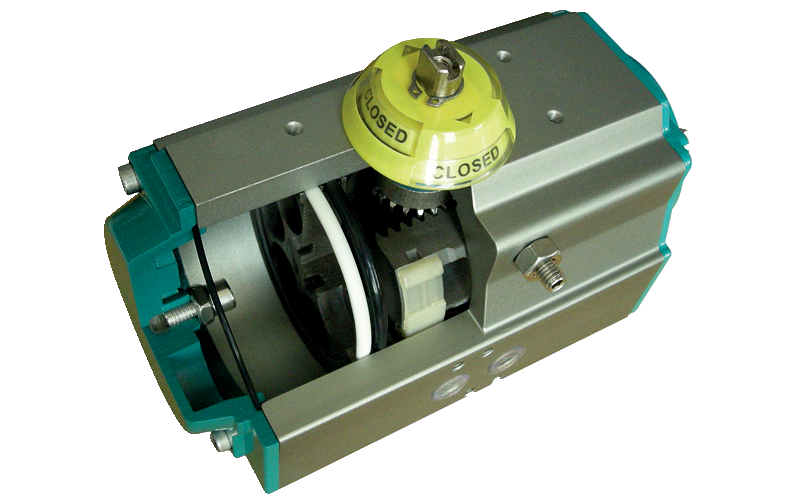
Double Acting Pneumatic Actuator Explained: Working Principle, Types, and Key Selection Factors
What Is A Double Acting Pneumatic Actuator
A double acting pneumatic actuator is a mechanical device that uses compressed air to drive motion in two directions. Air pressure is applied alternately to both sides of an internal piston, rack-and-pinion set, or vane chamber, so the actuator can open and close a valve without relying on an internal spring for the return stroke. This makes it a common choice for automated ball valves, butterfly valves, dampers, and other rotary shutoff equipment.
In industrial practice, the term usually refers to quarter-turn actuators used in flow control, although linear designs also exist for gate, knife gate, and process positioning tasks. Buyers typically evaluate output torque, air supply range, cycle life, mounting pattern, and compatibility with accessories such as solenoid valves, limit switches, positioners, and manual overrides.
Compared with manual operation, a double acting pneumatic actuator improves repeatability, reduces operator exposure in hazardous or remote areas, and supports integration into plant control systems. In facilities where valves cycle frequently or where closing torque and opening torque both matter, double acting designs often provide a more balanced and durable automation method than spring-return alternatives.
Common design references in the market include ISO mounting interfaces and NAMUR accessory patterns, because these simplify assembly with valve brackets, switch boxes, and solenoid valves. Even when detailed standards differ by project, interchangeability and maintainability remain central to selection.
Working Principle And Torque Behavior
The working principle is straightforward: compressed air enters one chamber and forces the moving element across its stroke, while air on the opposite side is exhausted. To reverse direction, the control valve switches the air path. In a rack-and-pinion rotary actuator, linear piston movement turns a pinion shaft, creating quarter-turn rotation at 0 to 90 degrees. In vane designs, pressure acts directly on a rotating vane inside the body.
Because both opening and closing strokes are powered by air, the actuator can deliver active torque in each direction. This is important when valve seats, packing friction, media buildup, or differential pressure create resistance during both opening and closing. A double acting pneumatic actuator is therefore well suited to applications where process conditions are unstable or where frequent cycling would fatigue a spring mechanism.
Torque output is not always constant across the full stroke. Valve torque curves often peak at breakaway and end seating, while actuator torque may vary depending on geometry. Correct matching requires comparing the actuator output at relevant angles with the actual valve torque requirement, then adding an engineering safety margin based on service severity, temperature, and supply air stability.
Control performance also depends on the surrounding pneumatic circuit. Solenoid valve Cv, air tubing length, filter-regulator quality, and exhaust speed all affect response time. For on-off isolation service, fast switching may be preferred. For modulating duty, the actuator must work with a positioner and a carefully tuned air system to avoid overshoot, hunting, or unnecessary wear.
Main Types And Construction Options
The most common quarter-turn type is the rack-and-pinion actuator. It is compact, widely available, and easy to pair with ball and butterfly valves. Two pistons move inward or outward under air pressure and rotate the central pinion. This design is practical for many general industrial services because it balances output, supports standardized accessories, and simplifies maintenance.
Scotch yoke actuators are another major category, usually selected for larger valves or higher torque duty. Their mechanism can provide higher torque at critical points in the stroke, which can be useful for valves with demanding breakaway or reseating requirements. They are often larger and mechanically heavier, but may offer better torque matching in severe shutoff applications.
Vane actuators have fewer moving parts and can be compact, but sealing and wear considerations vary by design and application. Linear double acting pneumatic actuator configurations are also used where straight-line motion is required rather than quarter-turn rotation. These can be paired with slide gates, louvers, and specialty process equipment.
Construction options include aluminum alloy, carbon steel, and stainless steel bodies; different seal materials for temperature or chemical exposure; and corrosion protection for outdoor or washdown service. Optional accessories such as position indicators, travel stops, lockout devices, and manual override gear should be evaluated early, because they can affect installation space, maintenance access, and overall package cost.
Where It Is Used And Who Should Specify It
A double acting pneumatic actuator is widely used in water treatment, chemical processing, food and beverage utilities, oil and gas support systems, mining, pulp and paper, marine service, and general manufacturing. Typical tasks include isolating process lines, diverting media, controlling utility air or water, and automating frequent valve cycles that would be inefficient or unsafe by hand.
The main decision makers are maintenance managers, project engineers, valve automation integrators, OEM designers, and procurement teams responsible for plant reliability. For these users, the actuator is not a standalone item. It is part of a valve package that must match process media, supply pressure, environmental conditions, and control architecture.
Applications that benefit most are those with stable compressed air infrastructure and a need for consistent cycle performance. Remote installations, skid-mounted systems, and hazardous production areas often adopt pneumatic automation because compressed air can be practical, robust, and easier to maintain than some electric alternatives, especially for simple on-off service.
For buyers seeking a dependable source, A safe and reliable flow control company can add value through actuator-valve matching, accessory integration, and practical support on mounting, torque review, and service condition checks. In flow control projects, the quality of the assembled package often matters more than the actuator alone, because alignment, bracket rigidity, and control component compatibility directly affect field performance.
Key Selection Factors For Buyers
Selection starts with valve data. Buyers should confirm valve type, size, seat material, operating frequency, shutoff class, and actual torque requirement across the stroke. Media characteristics such as solids, viscosity, scaling tendency, and pressure differential can materially change torque demand. Sizing an actuator from nominal valve size alone is risky and can lead to slow movement, seat damage, or failure to close under load.
Next comes air supply and control philosophy. The available pressure range, air quality, and whether the application is on-off or modulating will influence actuator size and accessory choice. A double acting pneumatic actuator should be evaluated with the real plant supply pressure, not just an ideal catalog value, especially where long tubing runs or shared air headers create pressure drop.
Environmental conditions also matter. Outdoor exposure, salt air, aggressive cleaning chemicals, dust, freezing temperatures, or high ambient heat can shorten seal life and corrode external hardware. Body material, coating, fastener grade, and seal selection should therefore be linked to site conditions. In some projects, ingress protection of switch boxes and solenoids is as critical as the actuator body itself.
From a procurement perspective, standardization is a strong advantage. Choosing common mounting patterns, replaceable seal kits, and locally serviceable accessories reduces downtime and spare inventory complexity. When comparing offers, buyers should review the complete bill of materials, not only actuator price, because bracket sets, couplings, solenoids, and feedback devices often account for a meaningful share of the final installed cost.
Installation, Maintenance, And Quality Control
Proper installation begins with mechanical alignment between the valve stem, coupling, bracket, and actuator output shaft. Misalignment increases side load, accelerates wear, and can distort torque transfer. Before commissioning, installers should verify travel stop settings, stroke direction, air connections, accessory function, and fail behavior of the surrounding control circuit.
Air quality is a major life-cycle factor. Clean, dry, regulated air protects seals and internal sliding surfaces. Water, oil contamination, or particulate matter can cause sticking, corrosion, and erratic response. A practical maintenance routine includes checking air preparation units, inspecting external fasteners and tubing, testing cycle response, and confirming that the position indication remains synchronized with actual valve position.
Quality control for a double acting pneumatic actuator package typically includes pressure holding checks, functional cycle tests, travel verification, and inspection of mounting interfaces and accessory wiring or tubing. For critical applications, buyers may also request documented torque assumptions, material traceability where available, or witness testing at package level. The point is not paperwork for its own sake, but reducing field mismatch and startup delays.
A safe and reliable flow control company can support this stage by supplying matched automation assemblies rather than isolated components, which helps reduce installation errors. Even without claiming special certifications beyond what is provided, a supplier that focuses on practical quality checks, parts compatibility, and serviceability usually delivers more predictable plant results.
Total Cost Of Ownership And Return Considerations
The purchase price of a double acting pneumatic actuator is only one part of total cost of ownership. Buyers should include air consumption, accessory package cost, installation labor, commissioning time, maintenance intervals, spare seal kits, downtime exposure, and expected operating life. In high-cycle applications, a cheaper actuator with poor sealing or unstable torque can become more expensive through repeated maintenance and unplanned shutdowns.
ROI is usually strongest when automation reduces manual intervention, shortens cycle time, and improves process consistency. Examples include remotely operated utility lines, batch systems requiring repeatable sequencing, and valves in hot, elevated, or hazardous locations. Savings often come from labor reduction, lower safety exposure, and fewer process interruptions rather than from the actuator alone.
Procurement teams should compare offers using a normalized basis: torque at available pressure, accessory scope, coating level, seal material, testing included, and spare parts availability. This avoids false comparisons between incomplete low-cost quotes and fully assembled packages. Asking for expected maintenance points and recommended spare parts at quotation stage often improves budget accuracy.
For long-term projects, it is sensible to favor suppliers that can support repeat orders with consistent interfaces and documentation. Standardized actuator packages simplify technician training, reduce storeroom variety, and improve replacement speed during outages, all of which contribute to lower operational cost over time.
Future Trends And Market Direction
The market for double acting pneumatic actuator systems is moving toward higher reliability, easier digital integration, and more application-specific packaging. End users increasingly expect ready-to-install assemblies with switch feedback, solenoid integration, and clearer maintenance access. This reflects a broader shift from component purchasing to packaged automation solutions.
Another visible trend is stronger attention to energy use and diagnostics. While pneumatic actuation remains attractive for many industrial services, plants are monitoring compressed air efficiency more closely. Better air preparation, optimized solenoid sizing, and reduced leakage in tubing and fittings can lower operating cost without changing the core actuator type.
Material selection is also evolving as more facilities face corrosive outdoor conditions, aggressive cleaning regimes, or stricter uptime expectations. Buyers increasingly ask for durable coatings, stainless hardware, and seals suited to wider temperature bands. In parallel, maintenance teams want simpler rebuild procedures and better spare parts planning instead of fully replacing actuator packages at the first sign of wear.
For B2B decision makers, the practical takeaway is clear: the best results usually come from choosing a double acting pneumatic actuator as part of a complete valve automation strategy. That means matching torque, environment, controls, and serviceability from the start, then working with a supplier such as A safe and reliable flow control company that can support a stable and maintainable flow control package.
Simmel International Inc. Cookie Notice
We use cookies and other tracking technologies to enhance your experience on our website, to show you personalized content and targeted ads, and to analyze traffic and site usage. By either clicking "Agree All" or continuing to navigate our website, you are consenting to the use of cookies and other tracking technologies on your device as described in our Privacy Policy.